Home Storage & Organization
Products · Home Storage & Organization
2 active deals
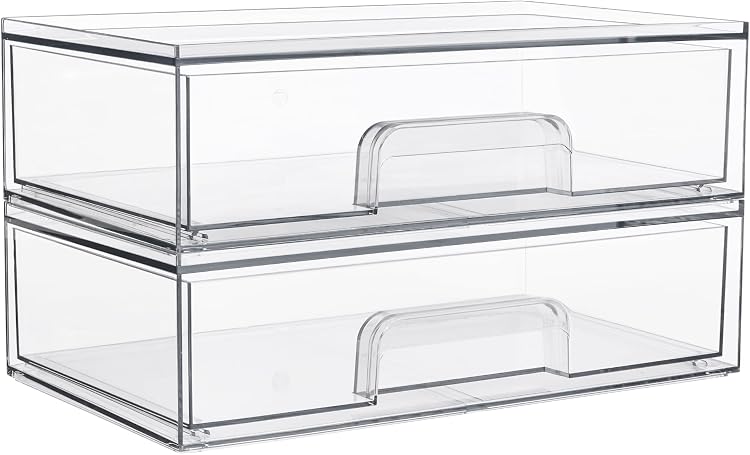
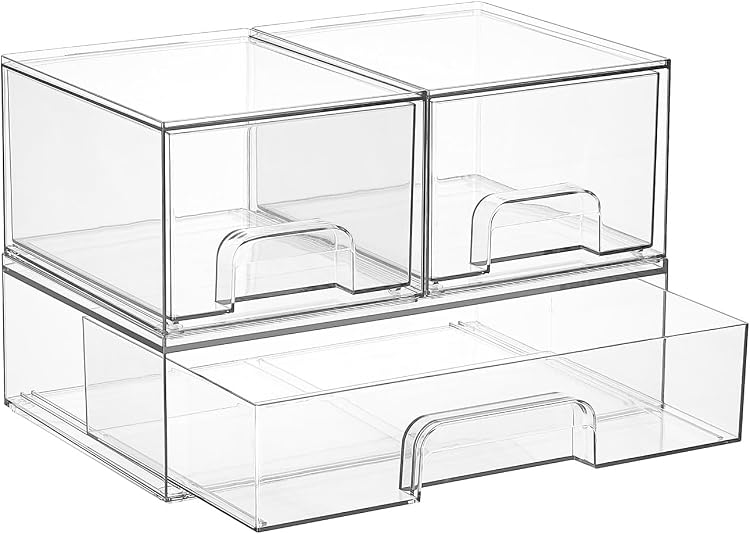
Storage and organization: measure the usable space
Identify what you want to store and how often you need access. A drawer divider, shelf organizer and large container solve different problems. Empty-looking capacity is not helpful if your actual items do not fit or cannot be retrieved conveniently.
Measure doorways, shelf depth, openings and clearance for lids or drawers. External product dimensions can differ substantially from internal capacity. Plan the organization around the objects and the space, not around the number of containers in a bundle.
Internal capacity and access
Check usable width, depth and height, including tapered sides, handles and lid mechanisms. For stackable products, consider whether lower items can be opened without dismantling the stack. A pull-out organizer needs sufficient travel space and a compatible cabinet opening. Decide whether visibility, labeling or closed storage is more practical.
Load, stability and material
Follow load limits for shelves, fittings and stacked containers. Match materials to moisture, temperature and cleaning needs. Heavy items belong in a stable arrangement, not simply whichever container is largest. Wall-mounted or tall storage may need suitable fixing or anchoring according to the manufacturer's instructions.
Maintenance and repeat purchases
Check whether containers can be cleaned and dried thoroughly, and whether food-contact use is explicitly allowed when relevant. Compare complete dimensions when extending a system: similar branding does not guarantee consistent fittings. Buying fewer appropriately sized units can be more useful than a large mixed set that occupies space without organizing your belongings.